

Why do we cover the earth with hard surfaces that don’t let rain in? Our cities are like giant slides for water, leading to flooded basements. Can’t we have driveways that don’t turn into ponds?
The solution is in new stormwater ideas that let water soak in. We’re talking about things like gaps in concrete blocks or plastic grids. Even concrete and asphalt can act like sponges, making hard surfaces soft.
Choosing the right permeable pavement design depends on the area. Whether it’s a quiet path or a busy parking lot, these surfaces let water through. It’s a rare win when our buildings work with nature, not against it.
Hydrologic Performance
Permeable pavement systems let rainwater soak into the ground. This is key in cities where regular pavement causes a lot of runoff. Runoff can lead to flooding and pollute water.
The design and soil properties of permeable pavements are why they work well. Water balance and runoff reduction are key to their success.
Water Balance and Runoff Reduction
These pavements are made to let rainwater seep through. This cuts down on stormwater runoff. For instance, a study in Guelph, Ontario, saw a 90% reduction in runoff.
Underdrains and soil infiltration rates are important. Without underdrains, runoff can be cut by 72% to 99%, depending on the design.
Performance Metrics
To check how well permeable pavements work, we use certain metrics. One important one is volumetric runoff reduction. It shows how much runoff is cut.
We also look at infiltration rates and water balance. These help us see how well the system manages stormwater. They also show how it helps urban drainage systems.
In summary, permeable pavement systems are a great way to handle stormwater in cities. They reduce runoff and improve water quality. This makes them a good choice for cities wanting to protect their water resources.
Structural Design Considerations
Permeable pavement design is more than just letting water through. It also needs to handle loads and stresses well. This makes designing it very hard.
When making permeable pavement systems, we must think about the site’s physical aspects. We look at the site’s shape, soil type, and how deep the water table or bedrock is. For example, slopes between 1% and 5% are best for this, as they help water soak in without causing erosion.
Physical Suitability and Constraints
The site’s physical features are key in deciding if it’s good for permeable pavement. Soil type is very important; areas with hard-to-penetrate soils might need underdrains for proper drainage. Also, knowing how deep the water table or bedrock is is vital to avoid water pollution. Designers must carefully check these things to make a system that’s strong and good for the environment.
For more info on designing permeable pavements, including soil types and site conditions, check out the Pervious Pavement Organization’s guide on structural. This guide offers detailed advice on designing systems that meet both water management and structural needs.
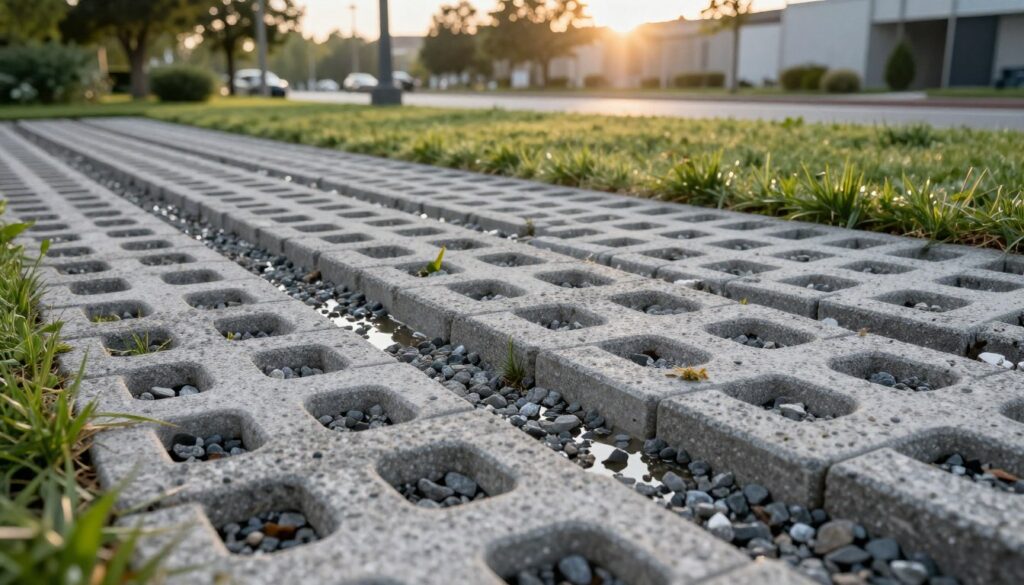
In short, a permeable pavement project’s success depends on knowing the site’s physical limits well. Designers can then make systems that handle stormwater well and help make cities more sustainable.
Maintenance and Lifecycle Costs
Stormwater pavement systems need regular care to last long and work well. They help reduce stormwater runoff and improve water quality. But, they do need upkeep.
Clogging is a big problem with permeable pavements. It happens when dirt and debris block the pavement’s pores. This makes it hard for water to pass through. Keeping the pavement clean is key to avoiding this.
Common Concerns and Mitigation Strategies
So, how do you keep permeable pavements in good shape? Vacuum-assisted street sweeping helps remove dirt and debris. Also, using clear stone or gravel in the bedding layer and joints can help prevent clogging.
It’s important to know the total costs of permeable pavements. This includes the upfront cost, ongoing maintenance, and future repairs. With regular care, the benefits of these systems can be fully enjoyed.
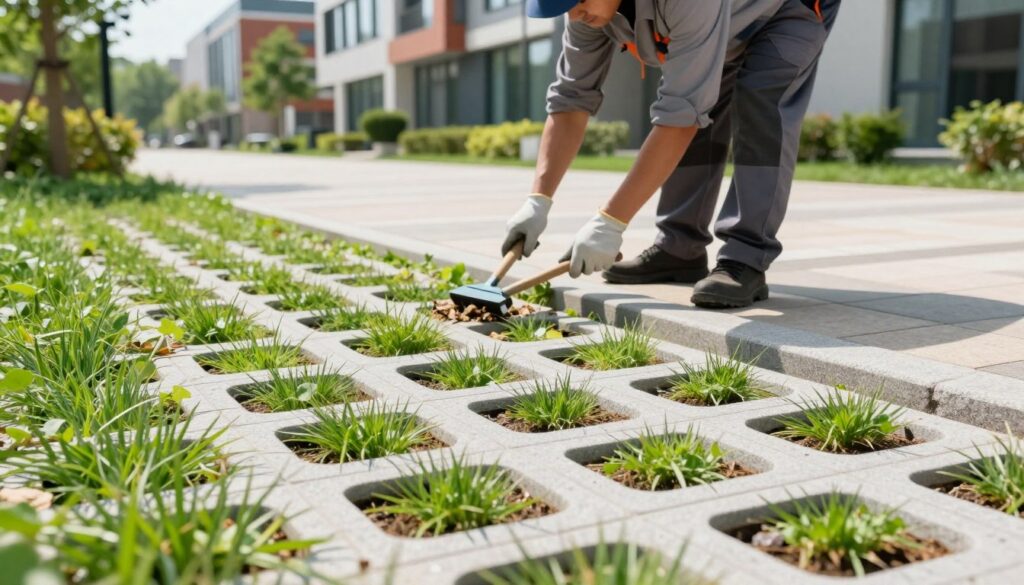
The costs of permeable pavements can be broken down into three parts: the initial setup, upkeep, and future fixes. The initial cost might be higher than traditional pavements. But, the long-term savings and benefits make up for it.
- Initial Installation: This includes the cost of materials and labor for setting up the system.
- Maintenance: This covers the ongoing expenses for keeping the pavement clean and checking it regularly.
- Rehabilitation: This is for any future repairs or replacements needed over the pavement’s life.
Knowing these costs and taking proactive steps in maintenance can extend the life and performance of stormwater pavement systems.
Applications in Urban Design
Cities are growing fast, and we need sustainable places to live. Permeable pavement design is key in making cities better. It helps manage stormwater and improves city life.
Permeable pavements work well in many urban areas. They’re good for driveways and parking lots. They also help cool cities by reducing heat.
Cooling Cities and Reducing Noise
Permeable pavements make cities cooler. They let rainwater soak through, reducing heat. They also make streets quieter by absorbing sound.
Looking ahead, permeable pavement design is vital. It helps create sustainable, resilient cities. These solutions are good for our environment.