

Reading a textbook on infiltration rates does not prepare a civil engineer for Harris County clay. Designing functional green infrastructure requires a physical grasp of material science and local hydrology. Attending hands-on sessions for engineers forces design teams out of the office and into the dirt, exposing the stark differences between digital simulations and physical construction constraints.
Firms that require their staff to participate in field labs and physical boot camps produce more accurate site plans. These training environments prevent costly design revisions by teaching professionals exactly how engineered soil blends behave under maximum saturation.
Bridging the Gap Between Software and Soil
Running a 2D hydrodynamic simulation assumes the baseline data is perfectly accurate. A hydrologist who inputs the wrong porosity variable for a biofiltration cell will still generate a passing grade from the software. Field labs teach professionals how to manually test soil compaction and percolation rates before relying on a computer output. Testing these physical properties gives project managers the exact metrics needed to calibrate their digital models correctly.
You can verify these baseline physical testing requirements through the American Society of Civil Engineers standards, which dictate exact protocols for analyzing site-specific soils. When professionals collect this data manually during a training module, they learn to spot anomalies that a standard software sweep misses entirely. Reviewing our stormwater modeling resources provides a strong foundation, but applying those models during a physical site survey cements the knowledge.
Field Execution for Bioretention and Sub-Bases
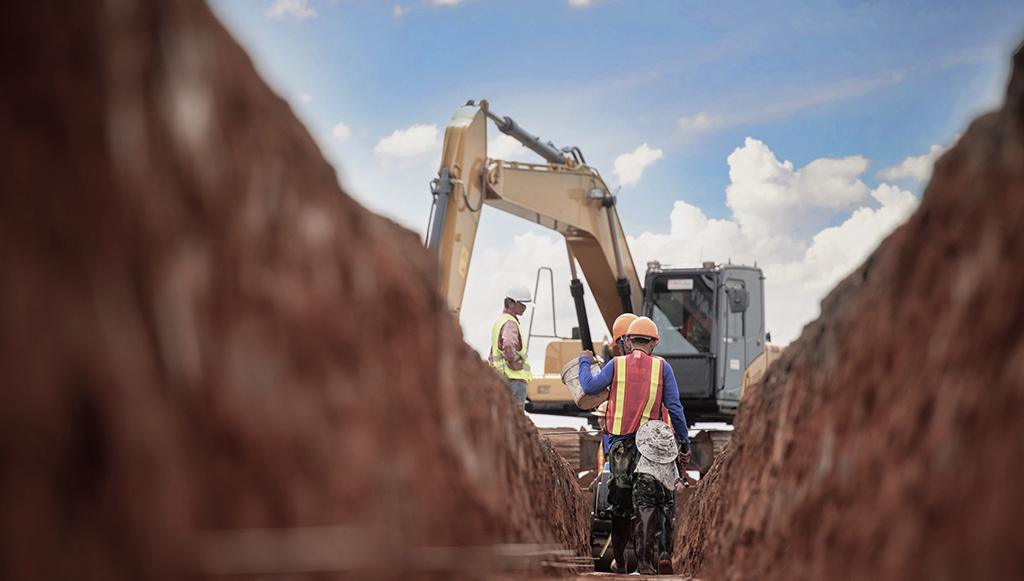
Contractors frequently struggle to translate complex AutoCAD drawings into functional surface features. An engineer who has never physically assembled a permeable interlocking concrete pavement system will struggle to supervise its construction. Field training seminars place designers directly in the construction trench, requiring them to lay geotextile fabrics and specify correct aggregate layers manually.
| Training Module | Theoretical Concept | Physical Field Application |
| Soil Amendment | Specified organic ratios | Mixing sand, compost, and topsoil on site |
| Sub-base Storage | Void space capacity | Verifying aggregate size and angularity |
| Flow Routing | Drawdown speed | Pouring water through physical cross-sections |
This direct exposure trains designers to write better construction specifications. They learn exactly where contractors usually take shortcuts and how to prevent those errors through clearer plan notes. The Environmental Protection Agency provides regional training frameworks that emphasize this exact type of physical construction oversight to guarantee long-term system survival.
Conducting Post-Construction Inspections
An engineered bioswale looks perfect on ribbon-cutting day, but its true performance surfaces after the first major hurricane. Classroom lectures cannot replicate the experience of identifying scour damage or sediment blockages in a mature rain garden. Physical inspection workshops teach engineers how to evaluate a site that has weathered three years of severe Gulf Coast storms.
Professionals learn to measure sediment depth and test the infiltration rate of aging soil media. They use these field observations to adjust their future designs, sizing pre-treatment forebays larger to capture debris before it ruins the main filtration basin. Checking the continuing education guidelines from the Texas Board of Professional Engineers and Land Surveyors confirms that these physical site assessments often qualify for required annual training credits, making them highly valuable for career advancement.