

Houston Parks Programs received a formal City Council update through youth recreation standards adopted on August 12, 2025, and those standards still shape after-school services available to families as of October 7, 2026. The central change was not a new fee structure or a new operating model, but a public set of rules for Houston Parks and Recreation Department youth recreation programs, including staffing, safety, facilities, parent notice, and oversight.
What Houston Parks Programs Changed At Council
Houston Parks Programs And Standards Of Care
Houston City Council held a public hearing and adopted Standards of Care for youth recreation programs operated by the Houston Parks and Recreation Department under Article XII of Chapter 32 of the City Code on August 12, 2025, according to the August 12, 2025 City Council agenda. For residents, the practical effect is that after-school recreation run through HPARD is governed by local standards rather than being treated as a state-licensed child-care center.
The agenda materials state that the standards cover children ages 5 to 13 and set minimum requirements for child-to-staff ratios, health and safety provisions, employee qualifications, building standards, and program oversight. The same City Council materials also require programs to inform parents that the state does not license these programs as child-care centers, as shown in the City Council agenda packet. That distinction matters for families comparing a recreation-based after-school program with licensed child care, because the governing rules and expectations are not identical.
The City Council item also stated that the ordinance did not recommend operational changes, which means the existing regulations remained in force as adopted in 2025. That makes the council action best understood as a public accountability step for youth recreation standards, not as evidence that HPARD changed every site schedule or expanded every center. Residents should therefore separate two questions: what standards apply citywide, and what program slots are available at a specific community center.
Program Rules Families Can Verify
Age Range, Hours, And Registration
According to HPARD program information summarized in the research record, the After-School Enrichment Program serves youth ages 6 to 13 and operates Monday through Friday from 3:00 p.m. to 6:00 p.m. HPARD lists the school-year session dates as September 8, 2026, through May 7, 2027, with registration continuing as space allows. The program is free of charge, but HPARD requires online registration through ActiveNet.
HPARD also states that transportation to and from program locations is the family’s responsibility. That point is a practical service-access issue, especially for households comparing after-school options near school dismissal routes, bus access, or work schedules. A free program can still be hard to use if a caregiver cannot reach the center by 3:00 p.m. or arrange pickup by 6:00 p.m. The city’s posted program structure gives families a clear set of details to verify before relying on a site for the school year.
HPARD program information in the research record lists a 1:25 staff-to-child ratio for the After-School Enrichment Program and states that the program is subject to the Texas Standards of Care. That ratio is a core planning figure for residents because it affects how many children a site can accept, how waiting lists may form, and why registration can remain open only as space allows. It also gives parents a concrete question to ask if they contact a center: whether the site has open capacity under the applicable staffing ratio.
Meals During The After-School Window
HPARD also operates a free After-School Meal Program through the Child and Adult Care Food Program during the school year, according to HPARD information in the research record. The meal program provides supper and snack between 3:00 p.m. and 6:00 p.m., Monday through Friday, at eligible community centers and partner sites. Children 18 and under can participate with no registration or proof of income required.
For Houston Parks Programs, the meal component is more than a convenience. It affects whether a child can remain at a center through the full after-school period without a family needing to provide food during that window. Because eligibility is site-based, residents should verify whether the center they plan to use is one of the eligible community centers or partner sites. The research record does not identify every meal site, so this point should be confirmed directly through HPARD before families make a fixed plan.
- Confirm that the center serves the child’s age group and has open space.
- Ask whether the site participates in the after-school meal program.
- Check pickup and drop-off logistics before relying on the program for daily care.
- Review the parent notice explaining that the program is not state-licensed child care.
Park Investment Context For After-School Access
Let’s Play Houston And Neighborhood Facilities
Separate from the August 12, 2025 Standards of Care item, Houston City Council approved the Let’s Play Houston initiative on July 15 and July 16, 2026, according to research materials from Houston First and Houston Parks Board. The initiative committed roughly $45.5 million toward an expected $60 million in public-private investment to revitalize 25 neighborhood parks citywide. Related local coverage of the Let’s Play Houston parks work tracks that neighborhood investment frame.
The research record states that more than 180 neighborhood parks were evaluated for the initiative, with selections based on physical condition and neighborhood social vulnerability. It also states that parks are spread across all 11 council districts and that community engagement included more than 40 events reaching more than 1,600 residents through pop-ups, listening sessions, and surveys. Those criteria indicate that the park initiative was structured around both facility condition and social need, not only park visibility or district preference.
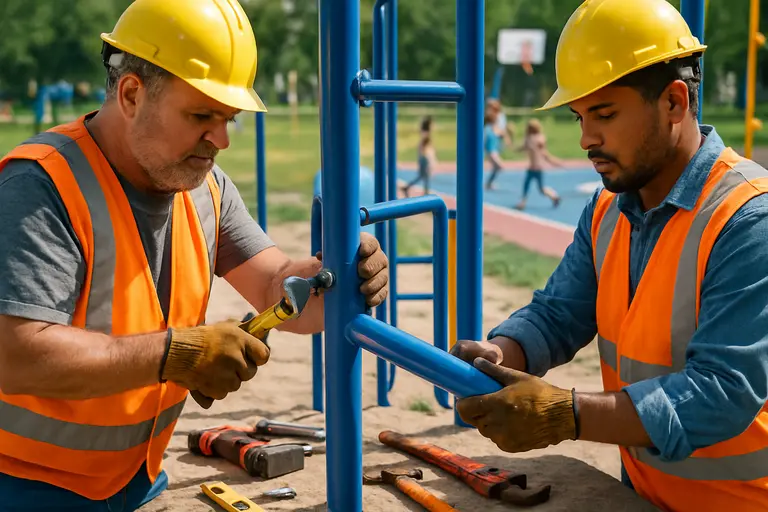
Groundbreaking began on September 24, 2026, at Lawrence Park in District C, with about $2 million in improvements, according to the research record. Greenwood, Andover, Haviland, and Montie Beach were also listed as parks entering construction. Since those projects were separate from the after-school standards vote, residents should not assume every park improvement will immediately expand after-school enrollment. The connection is more indirect: better neighborhood park infrastructure can support safer, more useful public spaces around youth programming where HPARD sites and capital projects overlap.
For civic planning, that distinction matters. Standards of Care govern how youth recreation programs operate. Let’s Play Houston concerns capital improvements at selected parks. The two efforts may serve some of the same families, but they move through different public decisions, funding structures, and timelines. Readers comparing public service benefits across neighborhoods should track both the program rules and the park construction schedule before drawing conclusions about service equity.
Houston Parks Programs Next Civic Steps
What Residents Can Track After The Council Action
Residents can treat the Standards of Care as a baseline for asking specific, non-speculative questions. At a program site, families can ask how the 1:25 ratio is applied, whether the site still has open registration for the September 8, 2026, to May 7, 2027 session, and whether the after-school meal service is available at that location. At the city level, residents can track whether future City Council agendas revisit HPARD youth standards, park operations, or capital spending connected to neighborhood centers.
Houston Parks Programs also sit within a wider civic services discussion about how the city uses recreation centers, parkland, and public-private funding to support families outside school hours. Regional civic resources, including detailed reports from ITPR, can help residents compare how public agencies communicate program rules and public-service decisions. For Houston, the most useful next step remains local: verify the specific HPARD site, session dates, enrollment status, meal availability, and transportation plan before depending on a program for daily after-school coverage.