

The Nashville Capital Plan filed by Mayor Freddie O’Connell in late September 2026 set out a local infrastructure package centered on schools, public safety, parks, stormwater, transportation, libraries, and public facilities. According to the Mayor’s Office, O’Connell filed his fourth Capital Spending Plan of his first term on September 29, 2026, with stated priorities tied to “schools, services, and safety” Mayor’s Office release.
The legislation associated with the plan requested authorization for up to $544,720,000 in general obligation bonds, including $107,400,000 for Metro Nashville Public Schools and about $19,001,000 for contingency, according to Metro Council file RS2026-2305 Council filing. The record also states the Capital Spending Plan was filed with Metro Council on September 25, 2026, and Council consideration began on October 5, 2026. As of October 11, 2026, the research provided here supports a review of the filed priorities and the start of Council consideration, not a final implementation schedule.
What Changed In Metro Nashville
Filing Date And Local Decision Point
The September filing placed several routine but high-cost local government needs into one capital package. Based on the Mayor’s Office release, the plan grouped school construction and repair, fire station projects, fleet replacement, parks and greenways, stormwater work, libraries, road and bridge maintenance, and public building investments. For residents, the civic point is direct: Metro Council had begun reviewing a proposed borrowing-backed capital program that would affect public buildings, neighborhood access, emergency response assets, and outdoor public space across Davidson County.
Capital spending plans differ from annual operating budgets because they generally fund durable assets rather than daily staffing or program costs. The official materials provided for this plan identify general obligation bonds as the requested financing tool. That matters for civic oversight because the bond authorization sets capacity for public improvements, while later procurement, design, construction, and maintenance decisions determine what residents actually experience at schools, parks, roads, libraries, and emergency service sites.
How Residents Are Affected
The Nashville Capital Plan was not limited to one neighborhood or one department. The Mayor’s Office described projects under Metro Nashville Public Schools, Nashville Fire Department, Metro Parks, Metro Water Services, Nashville Department of Transportation and Multimodal Infrastructure, libraries, and general public facilities. That spread indicates a broad service-maintenance approach rather than a single flagship project. The strongest supported reading is that the plan responded to multiple civic systems that require capital repair, replacement, or expansion.
For community groups and sustainability advocates, the practical question is how the city balances new construction with repair of existing assets. The official release identifies both categories: new fire stations were included, while maintenance and repairs were also listed for schools, libraries, parks, greenways, public buildings, roads, bridges, and culverts. That mix makes public tracking of project sequencing and maintenance standards useful after authorization decisions.
How The Nashville Capital Plan Allocated Funds
Nashville Capital Plan Figures In The Filing
The single largest named departmental amount in the official materials was the $107.4 million allocation to Metro Nashville Public Schools. The Mayor’s Office said those funds covered design, construction, additions, and renovations at Antioch Cluster Elementary Schools, Nashville School for the Arts, Amqui K-8, Neely’s Bend K-8, and Hume-Fogg/MLK Stadium. The same release also identified district-wide maintenance, safety and security upgrades, and replacement of school buses and other school vehicles.
Public safety funding was another major component. The Mayor’s Office reported $44 million for the Nashville Fire Department, including three new fire stations identified as Fire Stations 2, 24, and 25, plus upgrades to other stations. The plan also included the purchase of 12 new ambulances and fire trucks through the city’s heavy fleet replacement program. Those details suggest the public safety portion covered both physical facilities and response vehicles, two separate but linked capital needs.
Departmental Shares Named By Metro
Metro Parks was allocated $14.3 million in the Mayor’s Office description. Of that, $4.6 million was tied to completing major segments of the Cumberland River and Seven Mile Creek greenways, $6.4 million was tied to general park and amenity upgrades under the Plan to Play master plan, and $3 million was listed for greenway fencing, netting, bridge, and boardwalk repairs. Those are capital items that intersect with public recreation, pedestrian access, and environmental stewardship.
The plan also included $20 million for Metro Water stormwater engineering, construction, and maintenance. The Mayor’s Office connected that category to protection from flood damage and water pollution amid growing storm threats. While the provided research does not identify specific basins or project sites for this stormwater funding, the category is relevant to neighborhood resilience because drainage, runoff, and stream protection needs often determine whether parks, roads, homes, and public facilities can function during heavy rain.
Schools And Safety As Core Service Investments
MNPS Projects And Maintenance
Schools received the clearest and largest named amount in the package. The official list included both named campuses and system-wide needs, which makes the MNPS portion more than a building-by-building construction list. The inclusion of safety and security upgrades, district-wide maintenance, school buses, and other school vehicles indicates that the plan treated education infrastructure as a combination of classroom space, facility condition, student transportation, and basic safety systems.
The Nashville Capital Plan therefore raises several oversight questions that can be followed through public meetings and department updates. Residents can ask how MNPS prioritizes maintenance across campuses, what design and construction phases apply to the named projects, and how vehicle replacement decisions affect reliability and emissions over time. The provided official materials do not give those later details, so any claims about individual project timetables would require future Metro or MNPS documentation.
Fire Stations And Heavy Fleet Needs
The Nashville Fire Department allocation also combined facility expansion with equipment replacement. Building Fire Stations 2, 24, and 25 would represent capital work on fixed emergency service locations, while ambulances and fire trucks fall under heavy fleet replacement. The Mayor’s Office also said other fire stations would receive upgrades. Taken together, the public safety portion addressed physical readiness and vehicle capacity, though the provided research does not state response-time changes or service-area boundaries.
From a civic planning perspective, fleet replacement should be evaluated with lifecycle cost, maintenance history, emissions, and service reliability in mind. The official materials confirm the count of 12 new ambulances and fire trucks but do not provide fuel type, model, delivery date, or procurement cost per vehicle. Cautious public review should separate the confirmed allocation from later operational outcomes that had not been documented in the research.
Green Space, Stormwater, And Streets
Parks And Greenways
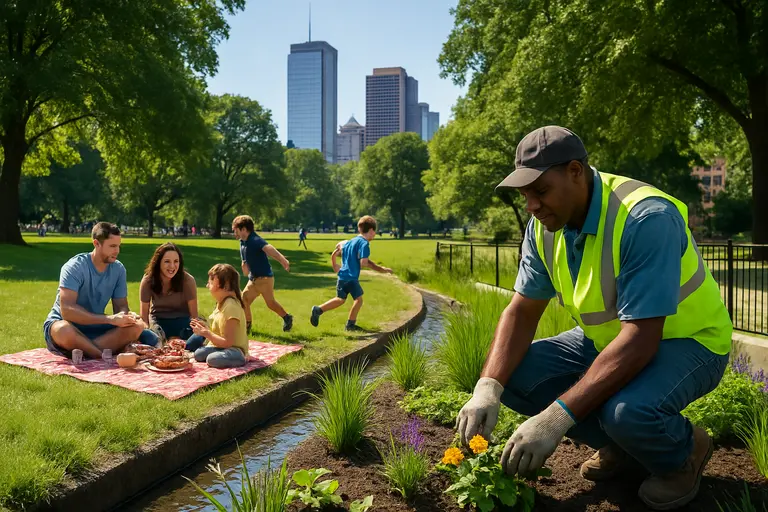
The parks allocation links capital spending to access and ecological function. The Cumberland River and Seven Mile Creek greenway segments named by the Mayor’s Office matter because greenways can serve transportation, recreation, shade, and stream-edge stewardship functions. The $3 million for greenway fencing, netting, bridge, and boardwalk repairs also signals attention to existing assets, not only expansion.
That distinction is significant for sustainable community initiatives. Building new segments can close gaps, but bridge and boardwalk repairs can determine whether existing routes remain safe and usable. The official materials do not identify completion dates, route mileage, or procurement status for the greenway work, so the supported civic takeaway is that funds were proposed for both completion of major segments and repair of supporting infrastructure.
Stormwater, Roads, And Facilities
Transportation received $86.3 million under the Nashville Department of Transportation and Multimodal Infrastructure, according to the Mayor’s Office. The described uses included maintaining and repairing roads, bridges, and culverts; safety improvements including Vision Zero projects; active transportation infrastructure such as sidewalks; and new heavy fleet equipment. Those categories place transportation safety, basic repair, and pedestrian infrastructure within the same capital frame.
Public facilities and essential service vehicles received a proposed $202 million. The Mayor’s Office listed $5 million for repairs to MAC Head Start campuses, replacement of 45 heavy fleet vehicles across Fire, NDOT, Waste Services, the Sheriff’s Department, and MAC, maintenance of Metro buildings, solar projects, and relocation of the Metro Southeast campus. Libraries were allocated $2.7 million for continuing work on the new Richland Park Branch Library and major maintenance and repairs to library facilities across Davidson County.
The sustainability value in this part of the package depends on execution details not included in the provided research. Solar projects were named, but capacity, sites, and expected savings were not. Sidewalks were named, but corridors were not. Culvert and bridge repairs were named, but locations were not. For readers comparing local infrastructure decisions with broader civic resource coverage, regional civic resources provide insight into how local capital choices fit into wider public-service goals.
Nashville Capital Plan Civic Takeaways
Questions For Public Review
The Nashville Capital Plan placed substantial proposed borrowing behind public assets that residents use daily: schools, fire stations, parks, greenways, roads, sidewalks, libraries, stormwater systems, and public buildings. The plan’s strongest documented priority was MNPS, followed by major public facilities and vehicle funding, transportation, fire services, stormwater, parks, and libraries as described in the official release and Council file.
The main caution is that a filed capital spending plan is not the same as completed construction. The official records in the research confirm the filing dates, requested bond amount, departmental allocations, and project categories. They do not confirm final Council action after October 5, 2026, detailed delivery schedules, contractor selections, or performance results. Residents, neighborhood associations, school communities, and environmental groups should therefore treat the plan as a key civic document for tracking, not as proof that each project had already been built or fully funded through every later step.
For sustainable local planning, the most useful follow-up is evidence-based: compare future Metro Council actions, departmental capital updates, procurement notices, and project status reports against the allocations described in September 2026. That approach keeps attention on measurable outcomes: safer school facilities, reliable emergency equipment, maintained parks and greenways, reduced stormwater risk, repaired transportation assets, and public buildings that serve residents efficiently.