

Downtown Houston improvements advanced in 2026 through completed pedestrian space on Main Street and a city-announced repair effort at Tranquillity Park. The civic question now is how these investments affect daily access, shade, maintenance, and the ability of residents, workers, and visitors to use downtown streets and parks outside major events.
Main Street Promenade As Downtown Houston Improvements
Downtown Houston Improvements On Main Street
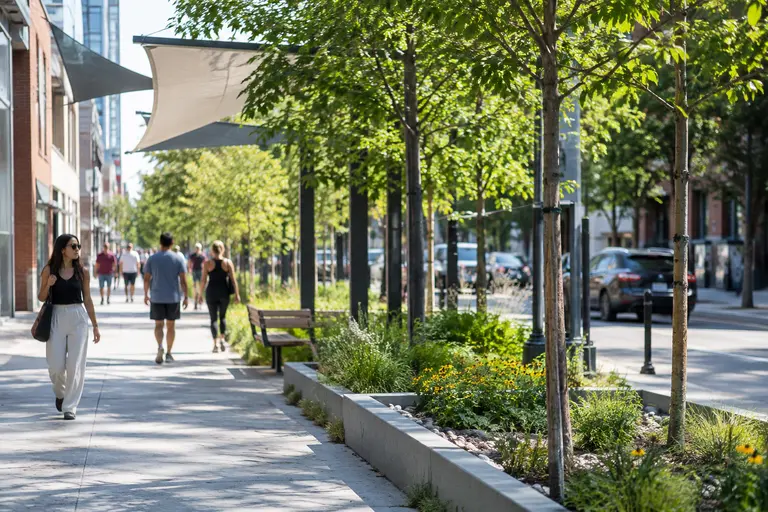
The clearest completed public realm change was the Main Street Promenade, a seven-block pedestrian-first corridor from Commerce Street near Allen’s Landing to Rusk Street. The project removed through-traffic and added plazas, shaded walkways, outdoor dining areas, widened sidewalks, and public art, according to the Houston Chronicle report. The same report placed the cost at about $17 million and said nearly one acre of roadway was reclaimed for walking and gathering.
For Downtown Houston improvements, the Main Street project is significant because it converted street space into a more flexible civic asset. A travel lane can move vehicles, but a plaza can support shade, rest, outdoor commerce, public art, and informal gathering. That tradeoff should be assessed through measured public benefits rather than promotional language. The available reported facts point to a project that moved beyond surface beautification and changed how a central corridor is assigned between vehicles and people.
Shade, Canopy, And Heat Exposure
The Chronicle reported that tree canopy along the corridor increased by about 154%, with roughly 85 to 100 new trees, shade structures, storefront awnings, and native landscaping, and that ambient temperatures along the corridor were estimated to drop by up to 5 degrees Fahrenheit. Those figures matter because Houston’s downtown public spaces are judged not only by design quality, but also by whether people can use them during hot weather. Shade should be treated as basic civic infrastructure, not as an optional amenity.
The policy lesson is that pedestrian projects need follow-up monitoring. Tree survival, shade coverage at different times of day, pavement temperature, lighting performance, and accessible routes all affect whether a corridor serves the public after a ribbon-cutting. If the city and downtown partners publish these measurements over time, residents can compare the promised benefits with observed conditions and identify maintenance needs before they become more expensive repairs.
Tranquillity Park And The Civic Core
What The City Announced
Tranquillity Park received renewed public attention on February 12, 2026, when Mayor John Whitmire announced a new mission for the downtown park focused on improving its physical condition, according to the City of Houston announcement. The city described planned improvements to Tranquillity Park and the Hermann Square area, including work intended to connect the park more effectively with nearby civic buildings such as City Hall and the Hobby Center. The city announcement also said 910 Louisiana was undergoing a $50 million reimagining intended to open its ground floor toward Hermann Square and City Hall.
This part of the public realm is different from Main Street because it sits within Houston’s civic campus. The users include city employees, residents attending public meetings, arts patrons, downtown workers, visitors, and people passing through the area. Repairs in this setting should be reviewed not only for appearance, but also for public access, clear sightlines, seating, lighting, and the ability to move between government buildings and open space without confusion.
Why Edges And Visibility Matter
Public parks in civic districts depend heavily on their edges. A park bordered by blank walls, unclear entries, or disconnected sidewalks can feel isolated even when it is centrally located. A park connected to active ground floors, public buildings, and clear walking routes can be easier to understand and use. The city’s stated focus on the physical condition of Tranquillity Park provides a practical starting point, but long-term success will depend on operations, programming rules, security practices, and maintenance funding.
For Downtown Houston improvements, Tranquillity Park is a test of whether public space upgrades can support routine civic life. Residents attending a council meeting, filing paperwork, visiting a performance, or using downtown transit should be able to identify safe and direct routes through the area. That kind of usability is less visible than a capital project budget, but it is central to whether public investment produces lasting value.
Funding, Governance, And Public Input
Public Spending And Accountability
The public realm work described in the cited sources involves major capital decisions: a reported $17 million Main Street Promenade and a city-described $50 million private reimagining at 910 Louisiana tied to its relationship with Hermann Square and City Hall. These figures should prompt ordinary civic questions. Who maintains the new spaces? Which agency or district receives complaints? How will public access be protected during private events or adjacent construction? Which measurements will be released after completion?
A cautious review should distinguish between completed work, announced work, and long-term operational commitments. Streets and parks often look strongest immediately after construction. Their real public value emerges over years, as trees mature, pavement wears, lighting systems require replacement, and users develop daily patterns. Residents tracking similar capital decisions can compare these questions with local practices described in this site’s related explainer on Houston infrastructure projects and public input.
Community Access Beyond Project Openings
Public input should not end when construction starts. Downtown users can provide evidence about blocked sidewalks, heat exposure, confusing crossings, broken lighting, inaccessible routes, and conflicts between service vehicles and pedestrian areas. Those observations are most useful when tied to a specific block, date, time, and agency responsibility. A clear reporting path would help distinguish one-time disruptions from design or maintenance problems.
For readers comparing civic resource models in other regions, One United Michigan civic resources are part of a network aimed at enhancing community access and engagement, similar to efforts in other areas. The relevant local standard for Houston remains direct: downtown investments should be evaluated by access, maintenance, public transparency, and the ability to support daily civic use.
Future Phases For Public Realm Stewardship
What Should Be Tracked Next
The next phase of public oversight should focus on stewardship rather than celebration. Main Street now has new pedestrian space, shade elements, outdoor dining areas, landscaping, and art. Tranquillity Park has a city-announced repair direction tied to the civic campus. Each area needs a public-facing maintenance plan that identifies responsible entities, expected service levels, and a process for reporting defects.
Useful performance indicators would include tree health, shade coverage, pedestrian comfort, sidewalk accessibility, lighting outages, surface conditions, and the frequency of temporary closures. These indicators do not require a partisan frame. They allow residents and decision-makers to ask whether capital spending is producing functional public space and whether future work should repeat, revise, or avoid specific design choices.
Equity And Everyday Use
Downtown projects often receive attention during major openings, but equity depends on ordinary access. People who work downtown, transfer through downtown, live nearby, attend civic meetings, or use public facilities need spaces that are legible, shaded, and maintained. If a pedestrian area mainly serves peak event periods, its civic return is narrower. If it supports lunch breaks, errands, public meetings, transit connections, and informal rest, its public value is broader.
That distinction should guide future phases. New plazas and park repairs should be reviewed for universal design, drinking water access where feasible, seating placement, wayfinding, tree care, and the interaction between public and private management. The public should be able to see which entity is responsible for each commitment and how performance will be checked after construction.
Downtown Houston Improvements As A Civic Benchmark
A Measured Standard For Future Work
Downtown Houston improvements now offer a practical benchmark for future public realm decisions: reclaim space where it improves access, add shade where heat limits use, repair civic parks where deferred conditions reduce public value, and publish enough information for residents to track results. The Main Street Promenade and Tranquillity Park work differ in form, but both raise the same governance issue. Public spaces require design, funding, operations, and accountability to work together.
The strongest next step is not a broader slogan. It is a public record of what changed, who maintains it, how well it performs, and how residents can report problems. If Houston applies that standard to future downtown streets, parks, and civic edges, the 2026 projects can serve as evidence for more disciplined public realm planning across the central city.