

California Transportation Funding changed the near-term project map for many local transportation agencies when the California Transportation Commission approved $2.7 billion for more than 150 new transportation projects statewide on September 2, 2026, according to Caltrans Caltrans release. Caltrans said the package was intended to improve travel times, expand multimodal options, improve safety, and strengthen infrastructure against climate risks. The action affected communities named in the state project list, including Orinda, Sonoma County, Oildale, Dunsmuir, Humboldt County, Los Angeles County, Orange County, and the greater Merced area. For civic readers and neighborhood advocates, the practical issue is how the approved dollars translate into safer crossings, maintained pavement, better drainage, transit station work, and public accountability during project delivery.
What California Transportation Funding Changed
California Transportation Funding By Source
Caltrans reported that approximately $1.6 billion of the $2.7 billion package came from the federal Infrastructure Investment and Jobs Act of 2021, while $542 million came from California Senate Bill 1. Caltrans said the remaining funding came from other state and local sources. That mix matters for city and county partners because different funding sources can carry different reporting, timing, and delivery expectations, even though the research material does not specify those requirements for each individual project.
The Governor’s office announced on August 28, 2026, that the same $2.7 billion package supported more than 150 projects and was aligned with the administration’s “Build More, Faster — For All” agenda. The administration also stated that transportation funding had reached $81.1 billion since 2019 and supported the creation of more than 800,000 jobs statewide Governor’s announcement. Those job and funding figures are statewide administration claims, not a project-by-project local employment forecast.
Local Agencies And Residents Affected
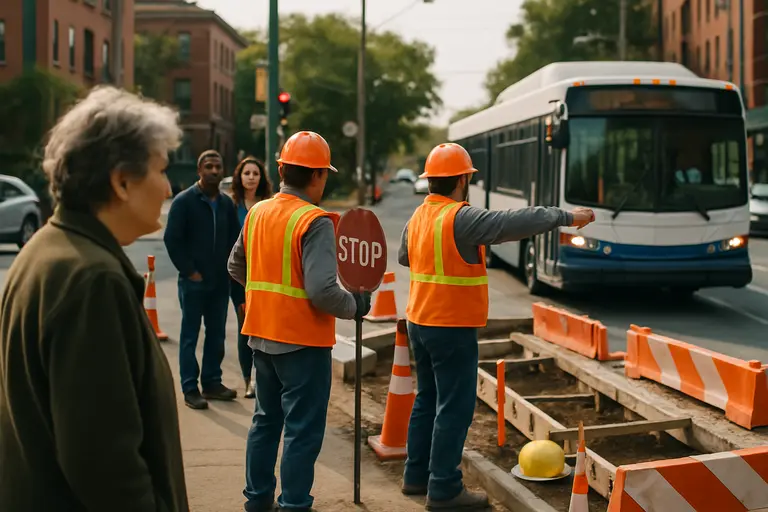
For local infrastructure offices, California Transportation Funding creates different tasks depending on the project type. A pavement rehabilitation project may require traffic staging, curb ramp coordination, and accessibility review. A transit station improvement may require coordination with transit operators, riders, and nearby businesses. A wildlife crossing or fish passage project may require construction planning around drainage, fencing, culvert replacement, or sediment reduction. The official project descriptions support those categories, but they do not provide a full local meeting calendar or completion date for every site.
The funding package should be read as a project authorization signal rather than proof that every improvement will be visible at once. Caltrans and the Governor’s office identified the approved projects and dollar amounts, but local residents will still need project notices, construction timelines, and agency updates to understand detours, access changes, and work sequencing. For insights into local public-service contexts, civic infrastructure reporting from a related site in the same network can be useful for comparing how transportation investments are discussed.
California Transportation Funding And Local Project Types
Safety, Access, And State Highway Maintenance
The approved package included several projects with direct neighborhood-level implications. Caltrans listed $267 million for the Caldecott Tunnel in Orinda to upgrade ventilation, pavement, drainage, and lighting systems. Caltrans also listed $63 million for State Route 37 in Sonoma County to add two High Occupancy Vehicle lanes between Sears Point and Mare Island. In Oildale, east of Bakersfield, Caltrans listed $1.8 million for Safe Route to School work, including warning beacons, signs, and ADA ramps at crosswalks.
Those examples show why local infrastructure development is not limited to large highway work. A tunnel system upgrade, a corridor lane project, and school-crossing improvements all sit within the same funding action, but they affect daily users in different ways. Tunnel improvements can focus on core operating systems such as ventilation, drainage, and lighting. A school-route project can focus on crossings, signs, and ADA access. A corridor project can change how vehicles are managed between named locations. Each type needs public-facing communication that matches its scale and likely disruption.
Transit, Ecology, And Resilience Projects
Caltrans identified $2.45 million in Los Angeles County for LA28 Infrastructure Improvements to improve landscaping, safety, and infrastructure at four transit stations before the 2028 Olympics. In Orange County, Caltrans listed $46 million for pavement rehabilitation on Interstate 5 through several cities, including Tustin, Santa Ana, and Anaheim, along with curb ramp, guardrail, LED lighting, and ADA compliance upgrades. Caltrans also listed $41 million to reconstruct the Orange Maintenance Station and improve State Route 22 safety through new guardrails, pedestrian and bicycle facilities, and zero-emission vehicle chargers.
The Governor’s office identified $76.5 million for a wildlife crossing in Dunsmuir in Shasta County, including wildlife crossing and fencing work along Interstate 5, plus drainage, guardrail, and sign improvements. It also identified $33.5 million for Eel River Fish Passage improvements in Humboldt County, including barrier removal, culvert replacement with concrete bridge spans, and sediment load reduction near State Route 1. These projects point to a broader definition of transportation infrastructure: one that includes ecological passage, drainage performance, and erosion-related work, not only vehicle capacity.
- Road condition: Caltrans listed pavement rehabilitation, tunnel pavement work, and highway corridor improvements.
- Access and safety: Caltrans listed crosswalk beacons, ADA ramps, guardrails, LED lighting, and pedestrian and bicycle facilities.
- Transit readiness: Caltrans listed station-area infrastructure and safety improvements in Los Angeles County.
- Environmental function: The Governor’s office listed wildlife crossing, fencing, drainage, culvert replacement, and fish passage improvements.
California Transportation Funding For Local Infrastructure Development
What Local Review Should Track
The most useful local review will separate approved funding from delivered results. The official announcements identify allocations and project purposes, but they do not provide every construction notice, lane-closure schedule, design milestone, or post-construction performance measure. Residents, chambers of commerce, school communities, disability access advocates, and environmental groups can use the official project list as a starting point for questions to the relevant state, regional, or local transportation agency.
In the greater Merced area, Caltrans listed $10.68 million for the State Route 140/165 Mobility Improvement Project, including planning and implementation of an intersection control improvement and a roundabout near Hilmar, with construction scheduled to begin in 2027. That example shows the value of date-specific tracking. A project funded in 2026 may have construction activity in 2027, and public communication should avoid treating approval, design, and construction as the same step.
For sustainable local infrastructure development, the strongest civic opportunity is to connect project funding with measurable community needs: safer crossings near schools, accessible curb ramps, reliable drainage, maintained pavement, usable transit stations, and environmental repairs where roads intersect with waterways or wildlife movement. California Transportation Funding does not answer every local delivery question, but the official September 2, 2026 approval created a documented funding base for communities to monitor. The next civic task is to follow agency notices, ask for clear schedules, and compare completed work against the safety, access, multimodal, and resilience purposes stated by Caltrans and the Governor’s office.