

As of August 25, 2026, drainage rehabilitation updates from official releases point to two clear civic priorities: replacing aging stormwater assets in dense neighborhoods and financing larger basin-scale projects where runoff overwhelms existing systems. The verified source set for this update supports firm discussion of New York City catch basin work and the Vista Grande Drainage Basin Improvement Project serving Daly City and nearby San Mateo County communities. Residents should read these updates as infrastructure planning signals, not as guarantees that every local flooding concern will be resolved on the same schedule.
This review is intentionally limited to facts supported by the cited official releases. Several other city and state projects were identified in research notes, but they are not discussed here in detail because this article uses only the allowed official source links. For residents, the main civic value is still practical: understand the funding source, the asset being repaired, the agency responsible, and the public notices that may follow.
Why Drainage Rehabilitation Updates Matter
What Changed By August 25, 2026
Two official announcements from spring 2026 show how local governments and federal agencies are framing stormwater repairs. New York City announced a long-term catch basin replacement investment on March 31, 2026. The U.S. Environmental Protection Agency announced federal financing on April 7, 2026, for a California stormwater project tied to the Vista Grande drainage basin. Both updates use different tools: one is a municipal capital commitment, and the other is a federal WIFIA loan. The shared policy issue is the same: stormwater systems need capacity, maintenance access, and predictable financing before severe rainfall exposes weak points.
Why Local Readers Should Read Funding Terms
Residents often experience drainage work first as street disruption, inlet work, utility markings, or construction notices. The more useful civic question is whether the work is replacing a specific asset, expanding system capacity, or changing how runoff is routed. A catch basin replacement program may affect block-level drainage and maintenance. A basin project may change downstream conveyance, storage, or outlet capacity. Those distinctions matter for neighborhood associations, small businesses, school campuses, and property owners trying to understand whether a project addresses a recurring street ponding location or a broader watershed problem.
New York City Catch Basin Program
Drainage Rehabilitation In New York City
On March 31, 2026, the New York City Mayor’s Office said the city would invest $108 million to replace more than 6,700 catch basins over 10 years, with bike-friendly designs and modernized catch basin cleaning equipment included in the work described by the NYC announcement. That framing matters because catch basins are the street-level entry points where runoff enters the sewer system. The city’s stated combination of replacement work and cleaning equipment suggests attention to both fixed infrastructure and operations.
For residents, the key time element is the 10-year horizon. A long program can produce sustained benefits, but it can also mean that some neighborhoods will see work earlier than others. The official announcement cited the total number of catch basins and the investment amount, but residents still need project-level schedules, street notices, and agency maps to understand when crews may reach a particular block. Civic groups should avoid assuming that a citywide number translates into immediate work on a specific corner unless the responsible agency publishes location-level information.
Resident Relevance At The Block Scale
A drainage rehabilitation program built around catch basins can affect daily street conditions in small but visible ways. Work may involve curbside access, temporary parking restrictions, traffic controls, or pavement restoration after utility work. The official release confirms the investment and asset type; it does not, by itself, settle questions about block sequencing, construction hours, or maintenance complaint response times. Those details usually require local construction notices, agency dashboards, or community board briefings. Residents should document recurring ponding locations with dates, photos, and service request numbers where local reporting systems are available.
San Mateo County Stormwater Financing
Drainage Rehabilitation In San Mateo County
On April 7, 2026, the U.S. Environmental Protection Agency announced a $34 million WIFIA loan for the Vista Grande Drainage Basin Improvement Project in San Mateo County, California. According to the EPA release, the project is intended to improve stormwater management, increase stormwater capacity, reroute runoff to Lake Merced, and construct a new ocean outlet. EPA also stated that the financing is expected to save about $2.6 million over the life of the loan and create about 500 jobs.
This project differs from a block-level inlet replacement program because it concerns basin-scale movement of runoff. The official details point to capacity, routing, and outlet improvements rather than only pipe repair. That makes the project relevant to residents who track flooding across jurisdictional boundaries, because water does not follow city lines in the same way that budgets and public works departments do. Daly City residents, nearby San Mateo County communities, and agencies connected to Lake Merced and coastal discharge points all have reasons to watch construction phasing and environmental review notices when posted by responsible agencies.
Financing Signals And Local Accountability
Federal WIFIA financing can reduce borrowing costs for qualifying water infrastructure projects, but residents should still ask how local repayment, operations, and maintenance will be handled. The EPA announcement states the loan amount, projected savings, job estimate, and project purpose. It does not replace local budget documents, rate discussions, or construction contracts. For civic oversight, the useful sequence is to compare the federal announcement with local public works updates, capital improvement plans, and meeting agendas once those documents are available.
What Residents Should Track During Construction
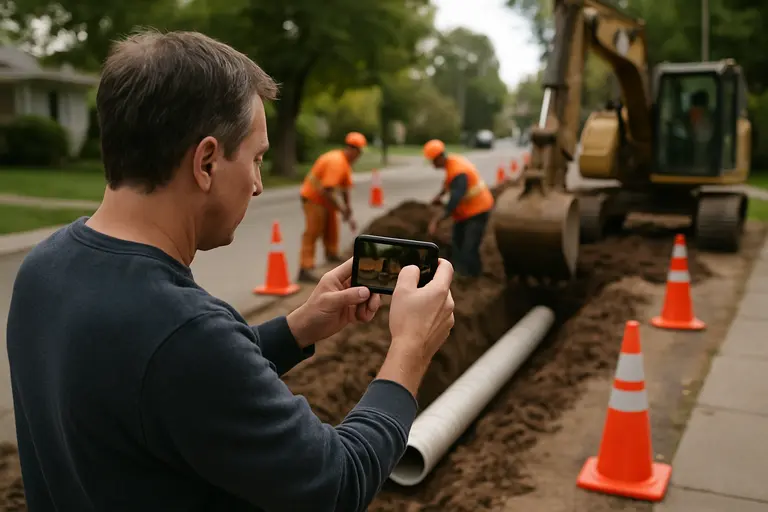
Construction Signals To Watch
Residents do not need engineering credentials to follow a drainage project, but they do need precise questions. The most useful questions come directly from the project elements confirmed in official releases: which assets are being replaced, what capacity is being added, whether runoff routes are changing, and which agency is responsible for maintenance after construction. For local business districts, construction access, delivery routes, sidewalk conditions, and parking restrictions can be as significant as the finished project. Regional civic readers comparing business-community impacts may also consult the related Richland Chamber site for insights and context from other areas in the chamber network.
- Ask the lead agency for location-level schedules rather than relying only on citywide or countywide totals.
- Track notices for lane closures, curb work, inlet replacement, outfall work, and temporary utility access.
- Compare capital funding announcements with adopted local budgets and public works contract actions.
- Report recurring ponding with date, location, photo documentation, and any service request identification available.
- For renters and small businesses, ask property managers or district offices how construction access notices will be distributed.
Local Comparison For Houston Readers
Houston-area readers can compare these national examples with local drainage service questions through this site’s analysis of Houston drainage signals. The civic lesson is not that one city’s project can be copied directly by another. Soil conditions, pipe age, rainfall patterns, budgets, and right-of-way limits differ. The transferable practice is public tracking: residents should connect funding announcements to asset inventories, construction schedules, maintenance obligations, and post-project performance measures.
Drainage Rehabilitation Resident Actions
How To Use These Updates Locally
Residents should treat each announcement as the start of a records trail. In New York City, the relevant trail begins with the March 31, 2026 mayoral announcement of $108 million for more than 6,700 catch basins over 10 years. In San Mateo County, it begins with the April 7, 2026 EPA WIFIA loan announcement for the Vista Grande project. The next civic step is to watch for local agency notices that identify construction packages, affected streets, public meeting dates, inspection milestones, and maintenance responsibilities.
Drainage rehabilitation is most useful to residents when it is visible in local documents before, during, and after construction. Before work starts, residents can review project scope and funding. During work, they can track access, safety, and schedule notices. After completion, they can compare observed street conditions with the stated project purpose. That cautious recordkeeping helps communities distinguish between funded improvements, unresolved maintenance concerns, and claims that still need official confirmation.