

Richmond Traffic Safety concerns raised through petitions can affect infrastructure planning most clearly when they connect resident observations to official crash records, city surveys, and public works project decisions. As of October 28, 2026, the reported resident petition focused on Jahnke Road and Forest Hill Avenue has highlighted a common civic question: whether neighbors can secure interim safety features while larger street projects move through design, funding, and construction review.
This analysis treats that petition cautiously. The permitted official sources for this article do not include a City of Richmond response specific to the Jahnke Road and Forest Hill Avenue request, so the direct policy result of that petition cannot be confirmed here. What can be assessed is the city’s documented process for collecting traffic safety input and the official safety data that give petitions greater weight in public decision-making. For readers exploring regional chamber resources, the Richland Chamber site provides valuable context on safety measures across networks, accessible through Richland Chamber.
What Richmond Traffic Safety Petitions Can Change
Richmond Traffic Safety Petition Signals
A petition does not, by itself, determine engineering outcomes. It can, however, create a dated public record that identifies a location, a safety concern, and the type of treatment residents are requesting. In a public works setting, that matters because staff and elected officials need to sort many requests across limited budgets, planned capital projects, and maintenance schedules. A petition that names a specific intersection, school route, sidewalk gap, or crossing problem is easier to compare with official crash patterns than a general complaint about driving behavior.
For the Jahnke Road and Forest Hill Avenue request described in the research provided for this assignment, the most defensible civic reading is that residents are seeking a faster response than a long-range corridor project may provide. Without an official city document confirming the number of signatures, the submitted text, or the city’s reply, those details should not be treated as verified in this article. The practical effect to watch is whether the request is acknowledged in a public meeting record, a Department of Public Works update, a capital project note, or a future safety treatment list.
What A Petition Does Not Prove
Resident concern is a valid input, but it is not the same as an engineering finding. Traffic volumes, crossing distances, sight lines, vehicle speeds, crash history, transit access, school travel patterns, and Americans with Disabilities Act access all affect whether a feature is feasible. A request for a stop sign, speed table, pedestrian refuge, marked crosswalk, signal timing change, or protected bikeway may require different review standards. In civic terms, the petition’s value is strongest when it prompts the city to explain which treatments can be installed quickly, which require design work, and which must wait for a funded reconstruction project.
Official Data Behind Richmond Traffic Safety Choices
Intersection Risk And Public Surveys
The City of Richmond Department of Public Works stated that 82% of fatal and serious-injury crashes in the city since 2017 had occurred at intersections, and the city launched two public surveys on December 22, 2025, to gather feedback on intersection safety improvements before those surveys closed on January 16, 2026, according to the city’s public works announcement. That official record is significant for Richmond Traffic Safety planning because it shows the city had already identified intersections as a central safety target before the latest petition activity described in the research.
The same city announcement described the effort as focused on safety improvements at intersections citywide, including low-cost and quick-build treatments. That framing is relevant to residents seeking interim action. If a location is not yet ready for full reconstruction, lower-cost measures may still be considered through a safety program, provided the city finds that the location, design, and operations support the treatment. The public value of the petition is therefore not only pressure for one intersection; it is also a test of whether citywide survey data can be translated into transparent location-by-location decisions.
Severe Injury Trends
The Richmond Safe and Healthy Streets Commission reported that traffic incidents in 2024 resulted in 17 deaths and 154 severe injuries, and it reported that pedestrian severe injuries and deaths rose from 29 in 2019 to 40 in 2023, remaining at 36 by November 2024, in the commission’s 2024 report. Those figures give resident petitions a broader public health context. They also support the city’s stated focus on design-based safety interventions rather than relying only on individual behavior change.
For local infrastructure planning, the numbers point to a clear standard for public review: requests should be measured against injury severity, not only against congestion or driver delay. A school-area or neighborhood petition can be more useful when it asks the city to publish whether a location is on a high-injury corridor, whether pedestrian injuries have occurred nearby, and whether planned capital work includes interim protection before final construction.
How Resident Input Enters Project Planning
From Complaint To Design Question
The path from resident concern to installation usually moves through several civic checkpoints. A petition may begin as a complaint about speeding or crossing conditions, but public agencies must convert that concern into a design question. The question may be whether drivers are approaching too fast, whether pedestrians lack a protected crossing, whether signal timing creates unsafe gaps, or whether sidewalk access is incomplete.
- Residents can identify the exact location, time of day, user group, and observed conflict.
- Public works staff can compare the request with official crash and injury records.
- City staff can determine whether a temporary, low-cost, or capital-funded treatment fits the site.
- Elected officials can ask for a public timeline and a written explanation if a request is deferred.
This sequence matters because it protects both urgency and accountability. Residents may be right that a location feels unsafe before a severe crash appears in official data. The city still needs a documented basis for choosing one treatment over another, especially where a change could affect transit operations, emergency access, drainage, parking, or nearby intersections.
Equity And Access Considerations
Traffic safety petitions can favor residents who have time, language access, and civic familiarity. For sustainable community planning, the city should pair petition review with open surveys, school outreach, transit rider input, disability access review, and neighborhood meetings. That approach reduces the risk that only the loudest or most organized blocks receive attention.
Richmond Traffic Safety decisions also intersect with environmental stewardship. Safer walking, biking, and transit access can reduce short vehicle trips when routes are continuous and comfortable. Those benefits depend on design details: shaded sidewalks, accessible curb ramps, visible crossings, and slower vehicle turns. A petition is most productive when it asks for those built conditions rather than only asking for enforcement.
Practical Implications For Jahnke Road And Forest Hill Avenue
School-Area Requests And Interim Measures
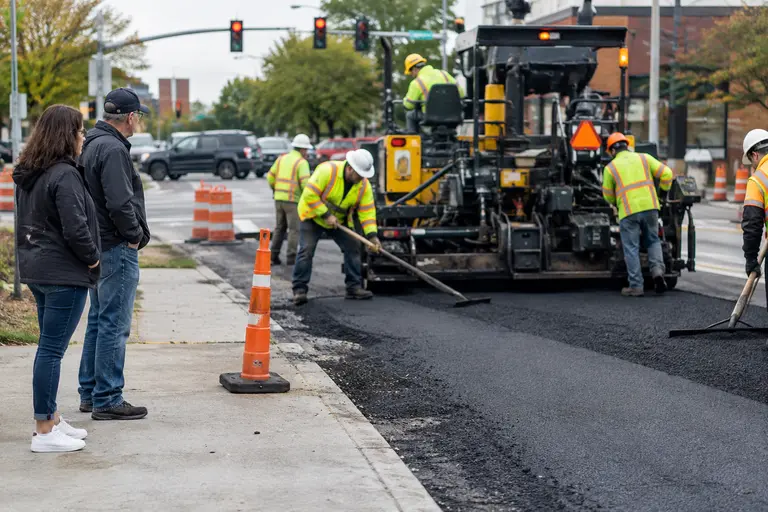
The reported Jahnke Road and Forest Hill Avenue petition should be evaluated through official records before any firm claim is made about its outcome. If the city confirms the request, residents and council members could ask whether interim tools are eligible before larger corridor work is complete. Potential categories include temporary curb extensions, improved markings, crossing visibility upgrades, speed management features, or signal timing review. This article does not state that any of those treatments has been approved for that location.
The public question is not simply whether a petition “wins.” The stronger measure is whether the city provides a traceable response: what was reviewed, which standards were applied, what can be installed quickly, and what remains tied to a funded project schedule. That level of documentation helps residents understand whether delay reflects engineering constraints, budget limits, coordination with utilities, or competing safety priorities.
Public Works Capacity And Tradeoffs
Every requested safety feature competes for staff review, materials, contractor time, and public money. That does not weaken the case for action near schools or high-risk intersections. It does mean residents benefit from asking for a clear triage method. A city can publish criteria such as injury history, proximity to schools and transit, pedestrian volumes, speed data, and readiness for quick-build installation. Clear criteria make petition-driven planning less reactive and more consistent.
Richmond Traffic Safety Petition Impact
The main impact of the current petition activity is civic pressure for earlier, clearer, and better documented safety decisions. Official city records already show an intersection-focused safety concern and a recent process for public input. Official commission data show that deaths and severe injuries remain a serious local issue. The next useful step is not speculation about unconfirmed outcomes; it is a public city response that links the petition location to crash data, project timing, and any interim treatments the Department of Public Works can justify under adopted safety practices. That is how Richmond Traffic Safety advocacy can move from resident concern to accountable infrastructure planning.