

The SUSD bond election will ask Scottsdale Unified School District voters on November 3, 2026, to decide a $375 million capital bond request. The Scottsdale Unified School District Governing Board voted 5-0 on May 12, 2026, to place the measure on the special election ballot, according to the district’s 2026 bond election information. For residents, school families, staff, and neighborhood groups, the civic issue is not only the size of the request. It is how a capital program of this scale would affect public buildings, technology systems, safety work, buses, and long-term maintenance across existing campuses.
SUSD states that the bond would be used for capital purposes, not staff salaries or day-to-day operating costs, as required by Arizona law. That distinction matters for local infrastructure review because the proposal is framed around durable assets: school buildings, technology, equipment, transportation assets, and campus systems. The district’s materials also state that oversight would include a Superintendent’s Bond Oversight Committee, quarterly updates to the Governing Board, a public project-tracking dashboard, and online financial transparency. Those tools would give residents formal points for monitoring spending if the measure passes.
What the SUSD bond election Would Fund
SUSD bond election Spending Categories
SUSD’s published bond materials divide the proposed $375 million into six broad capital categories. The largest share, about 34%, is listed for learning environment improvements. Technology infrastructure accounts for about 25%. Site lifecycle renovations, including roofs, HVAC, and building systems, account for about 20%. Safety and security represents about 14%, transportation updates about 5%, and administrative capital improvements about 2%, according to SUSD.
| Capital Category | Share Listed By SUSD | Local Infrastructure Relevance |
|---|---|---|
| Learning Environment Improvements | 34% | Classroom and campus upgrades tied to daily student and staff use |
| Technology Infrastructure | 25% | Network, device, and system investments used across school operations |
| Site Lifecycle Renovations | 20% | Roofs, HVAC, and building systems that affect facility condition |
| Safety And Security | 14% | Capital improvements connected to campus security needs |
| Transportation Updates | 5% | Bus and support vehicle replacements listed by the district |
| Administrative Capital Improvements | 2% | Capital assets supporting district administration |
The allocation shows that the proposal is weighted toward existing assets rather than expansion. SUSD says every existing campus would receive some investment. ABC15 reported that the district is not planning to build new schools under the measure, with declining enrollment cited in that reporting and more than two dozen schools identified as part of the district’s existing campus base ABC15 reported.
Capital Work And Campus Conditions
For civic review, the main infrastructure question is how the district would convert category-level allocations into campus-level project lists, schedules, and procurement decisions. The research materials support the broad categories and oversight structure, but they do not provide a complete project-by-project construction timeline. That means residents can assess the proposed purposes now, while the exact timing of specific work would depend on future district implementation if voters approve the measure.
The site lifecycle category is especially relevant to sustainable community planning because roofs, HVAC, and building systems are long-lived assets. The available sources do not specify project-level energy standards or projected environmental outcomes. A cautious reading is that the measure would create the funding capacity for building-system work, while any measurable sustainability result would depend on later scopes, bids, equipment choices, and public reporting by SUSD.
Tax Timing for the SUSD bond election
SUSD bond election Registration Date
The special election date is November 3, 2026. SUSD lists October 5, 2026, as the voter registration deadline for that election. Because October 5, 2026, is the current date, residents reviewing eligibility should rely on official election procedures and district election materials rather than informal summaries. The measure remains a pending ballot question, so any discussion of construction, spending, or tax effects should be framed as conditional on voter approval.
SUSD estimates the property tax impact at about $0.26 per $100 of assessed valuation. The district’s example translates that estimate to about $157 per year, or about $13 per month, for an owner-occupied home valued at $607,000. A related local explainer on Scottsdale bond election tax implications focuses on the same practical voter question: how the capital request connects to household tax estimates.
How The Tax Estimate Fits The Project Scope
Tax estimates are useful for comparison, but they do not settle the policy question by themselves. The district is asking voters to weigh a capital cost against listed facility, technology, safety, transportation, and administrative capital needs. Because the bond would not pay for salaries or routine operations, the ballot decision is narrower than a general school funding debate. It is a question about whether voters authorize debt for capital assets across existing SUSD campuses.
That scope also affects public accountability. If approved, the strongest test of the program would be whether reported spending remains tied to the listed capital purposes. SUSD’s stated plan for a Superintendent’s Bond Oversight Committee, quarterly Governing Board updates, a public tracking dashboard, and online financial transparency provides a structure for that review. The usefulness of that structure would depend on timely updates, clear project descriptions, and consistent cost reporting.
Community Infrastructure And Oversight
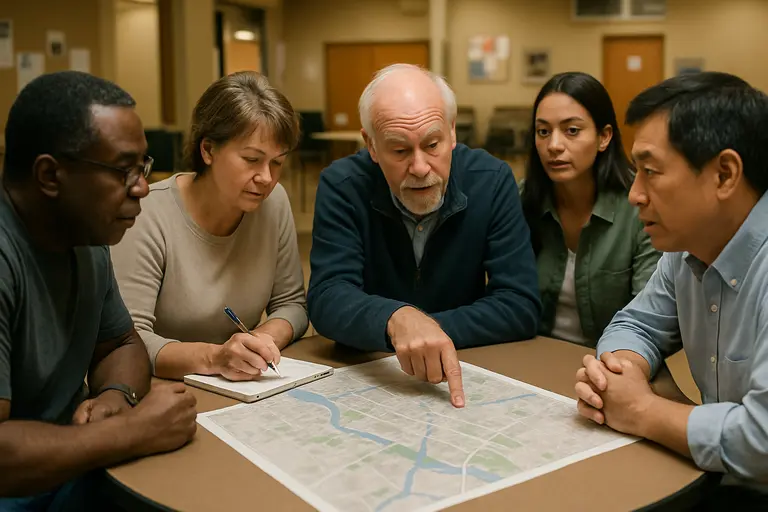
Why Existing Campuses Are The Center Of The Proposal
The district’s focus on existing campuses places the proposal within a broader local infrastructure pattern: maintaining public assets before replacement becomes more expensive or disruptive. SUSD’s published categories include building systems, learning environments, technology, security, and transportation. Each category touches daily civic life because schools function as public facilities used by students, staff, families, and, in many cases, community groups outside regular classroom hours.
From an events and community planning perspective, school infrastructure also affects how neighborhoods use public space. Facility condition, safety systems, transportation equipment, and technology capacity can influence whether campuses can support public meetings, student programs, and district communications. The research materials do not quantify those community-use effects, so they should not be overstated. Still, the listed categories are plainly tied to public facilities that serve local residents beyond a single budget year.
Information Residents Can Track
Residents seeking an evidence-based view can separate confirmed facts from open implementation questions. Confirmed items include the May 12, 2026, Governing Board vote, the $375 million request, the November 3, 2026, election date, the October 5, 2026, registration deadline, the spending categories, and the stated tax estimate. Open questions include the order of campus projects, bid timing, final equipment choices, and the level of detail that will appear in public dashboards if the bond passes.
- Track Governing Board updates for quarterly spending and project status if the measure is approved.
- Compare dashboard entries with the six capital categories listed in district materials.
- Review whether campus-level work aligns with the district’s statement that every existing campus would receive some investment.
- Check whether transportation purchases are reported separately from building and technology work.
For readers interested in broader civic infrastructure issues, One United Michigan offers insights from a related site in the same network. Such coverage amplifies local understanding by consistently tying public decisions to documented records, dates, and financial assumptions.
Scottsdale Infrastructure Questions After the SUSD bond election
What Voters And Residents Can Measure
If voters approve the measure on November 3, 2026, the next phase would shift from ballot language to implementation. The key public measures would include whether bond proceeds stay within capital uses, whether project updates are issued on the quarterly schedule described by SUSD, and whether the public dashboard gives residents enough detail to connect spending to campuses and asset categories. If voters reject the measure, the district would still face the capital needs described in its materials, but the research provided here does not identify an alternative funding plan.
The SUSD bond election is therefore best understood as a local infrastructure decision with fiscal, operational, and accountability dimensions. The official record supports the amount requested, the ballot date, the capital categories, the tax estimate, and the oversight tools the district says it would use. It does not yet support claims about final construction schedules, completed environmental gains, or precise campus-by-campus outcomes. Those details would require future district records and public reporting after the vote.