

The SUSD Bond Election is scheduled for Tuesday, November 3, 2026, after the Scottsdale Unified School District Governing Board called a special bond election. According to SUSD’s 2026 bond election page, the district is asking voters to authorize $375 million in bonds for capital improvements across the district.
For residents, the measure is a local infrastructure question as much as a school finance question. SUSD states that the bond would be limited to long-term capital needs, including facility renovations, safety and security enhancements, learning environment modernization, instructional technology upgrades, transportation and support vehicle replacement, and other infrastructure needs. The district also states that Arizona law does not allow these bond funds to be used for daily operating expenses such as teacher salaries, utilities, or classroom supplies.
What Changed in the SUSD Bond Election
SUSD Bond Election Date and Registration
The election date set by SUSD is Tuesday, November 3, 2026. The district lists Monday, October 5, 2026, as the last day to register to vote for participation in this bond election. Those two dates frame the immediate civic timeline for Scottsdale Unified School District residents who want to review the proposal, confirm eligibility, and assess how the measure would affect household or business property tax planning.
SUSD also reports that the Governing Board authorization for the bond election was unanimous. That fact does not decide the ballot question; it indicates that the full board agreed to send the proposal to voters. The decision now rests with eligible voters in the district boundaries on November 3, 2026.
How the 2016 Bond Fits In
SUSD states that its previous bond measure, approved in 2016, has been “substantially utilized” to address capital needs across schools. The district reports that many facility and infrastructure priorities from that earlier measure are in progress or completed. For residents evaluating the 2026 request, that history matters because the current proposal is being presented as a new capital authorization after prior bond capacity has largely been applied to earlier needs.
The district’s wording leaves room for residents to ask project-level questions. “Substantially utilized” does not, by itself, identify every completed project or every remaining need. The most useful public discussion will likely focus on which facilities have already received capital work, which needs remain, and how SUSD would rank projects if voters approve the new authorization.
SUSD Bond Election Tax Impact and Capital Uses
Estimated Cost to Property Owners
SUSD estimates the annual tax rate for the bond at about $0.26 per $100 of assessed, limited valuation. For a typical owner-occupied home valued at $607,000, the district estimates the cost at about $157 per year, or about $13 per month. The district states that homes with different values should expect the impact to scale proportionally based on assessed valuation.
| Item Listed by SUSD | District Estimate or Description |
|---|---|
| Total bond authorization | $375 million |
| Estimated annual tax rate | About $0.26 per $100 of assessed limited valuation |
| Example owner-occupied home value | $607,000 |
| Estimated example cost | About $157 per year, or about $13 per month |
For the SUSD Bond Election, the district’s example gives residents a reference point, but the actual household impact depends on assessed limited valuation rather than only a general market value figure. Residents reviewing the measure should compare SUSD’s rate estimate with the valuation information used for property tax purposes before making assumptions about their own cost.
Capital Projects Named by the District
SUSD identifies several categories that would be eligible for bond funding if the measure passes. Those categories include school facility renovations, safety and security enhancements, learning environment modernization, instructional technology upgrades, replacement of transportation and support vehicles, and other infrastructure needs. Because the district describes categories rather than every final project in the research provided, residents should treat the measure as a capital authorization and look for the district’s project tracking materials as details are released.
From an environmental resource and local infrastructure perspective, the facility renovation category deserves close public attention. School campuses include buildings, paved areas, transportation access points, and utility systems. If specific renovation scopes are later posted by SUSD, residents can ask whether site design choices reduce runoff pressure, improve drainage performance, and support low impact development where feasible. Those questions are consistent with the district’s stated capital categories, but the district’s published bond summary in the research provided does not list individual stormwater projects.
Oversight, Public Meetings, and Resident Questions
Oversight Tools SUSD Says It Would Use
SUSD states that, if the bond passes, it plans several accountability measures. The district lists a Superintendent’s Bond Oversight Committee with parent, staff, and community representation; quarterly updates to the Governing Board; and a public project tracking dashboard. These mechanisms would be central for residents who want to follow whether approved funds are being assigned to the project types described before the election.
Oversight is especially relevant because bond funds are not operating dollars under the district’s description of Arizona law. Residents should separate questions about teacher salaries, utilities, and classroom supplies from questions about buildings, technology, safety, vehicles, and infrastructure. That distinction can reduce confusion during public meetings and help keep comments tied to the legal purpose of the measure.
Town Hall Dates Listed by SUSD
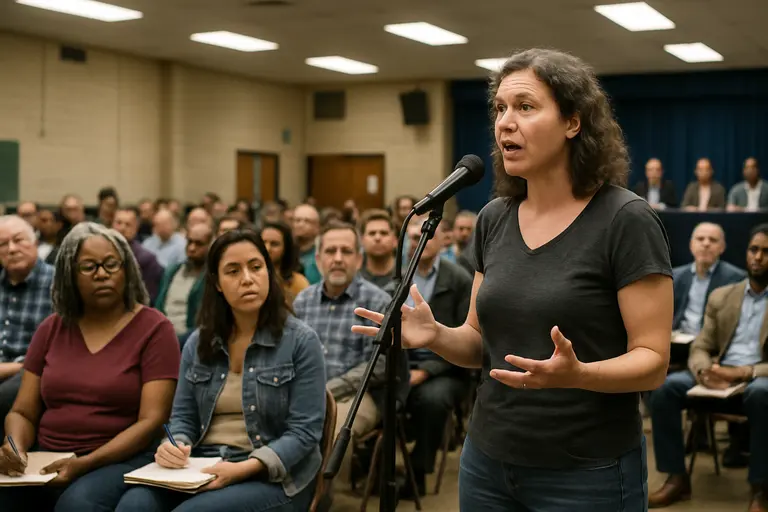
SUSD lists several town hall meetings for residents to learn more and ask questions. As of September 15, 2026, the September 1 meeting at Coronado High School had already passed. The district’s listed meeting at Desert Mountain High School is dated September 15, 2026. Later listed meetings include Saguaro High School on September 17, 2026; Chaparral High School on September 23, 2026; and Arcadia High School on September 29, 2026.
- Coronado High School: September 1, 2026, listed by SUSD and already past as of September 15, 2026.
- Desert Mountain High School: September 15, 2026, listed by SUSD.
- Saguaro High School: September 17, 2026, listed by SUSD.
- Chaparral High School: September 23, 2026, listed by SUSD.
- Arcadia High School: September 29, 2026, listed by SUSD.
Residents who attend a meeting after September 15, 2026, can focus questions on project ranking, campus-specific needs, planned public reporting, and how the district would handle changes in construction cost or project timing. For those interested in broader community-focused public information, the related network site Trinity Chamber offers an additional perspective.
What the SUSD Bond Election Means for Residents
The ballot measure asks Scottsdale Unified School District voters to decide whether to authorize $375 million in borrowing for long-term capital work. The district has identified the broad uses, the estimated tax rate, the example homeowner cost, the voter registration deadline, and the oversight structure it intends to use if the measure passes.
The most practical next step is document review. Residents can compare the district’s stated project categories with the needs they observe at nearby schools, then direct questions to SUSD through its public meeting process and Governing Board updates. The SUSD Bond Election will be decided on November 3, 2026, and the civic value of the process will depend on clear project information, careful cost review, and public follow-through after the vote.